Pneumatic
Conveying Equipment
Foremost
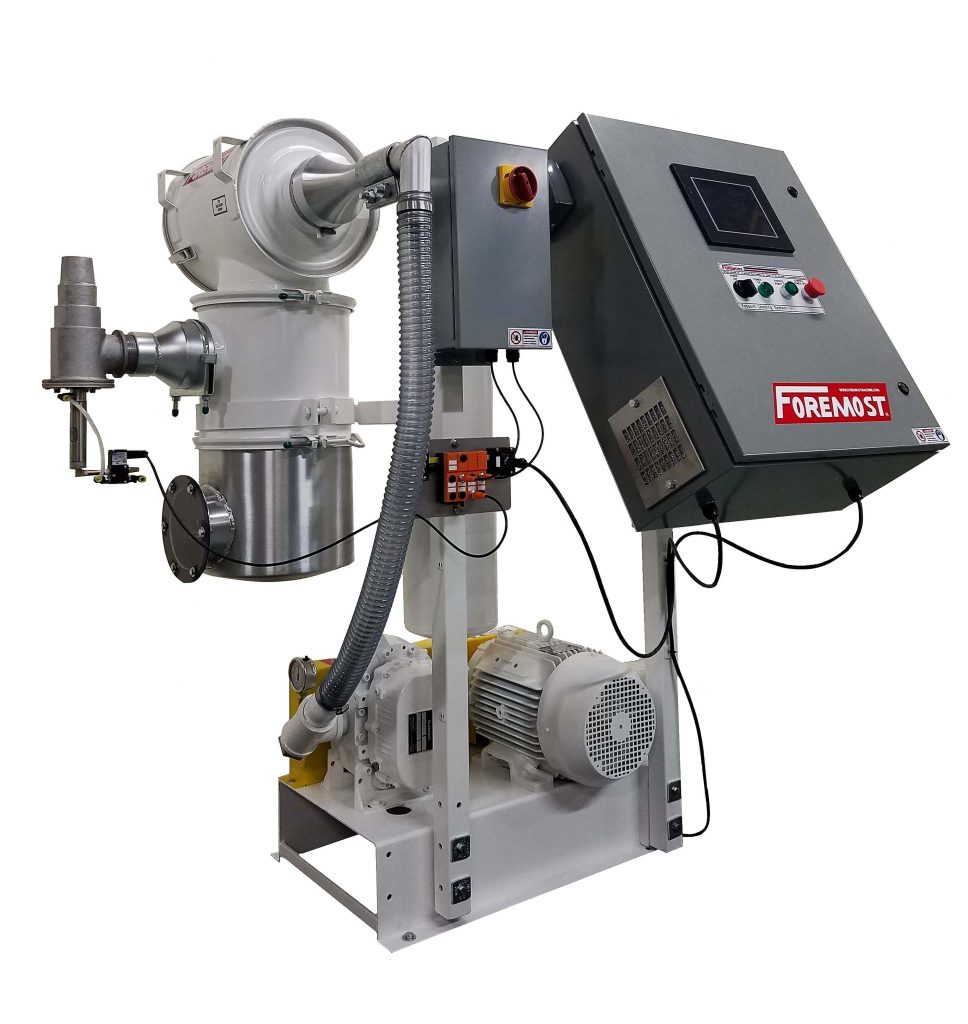
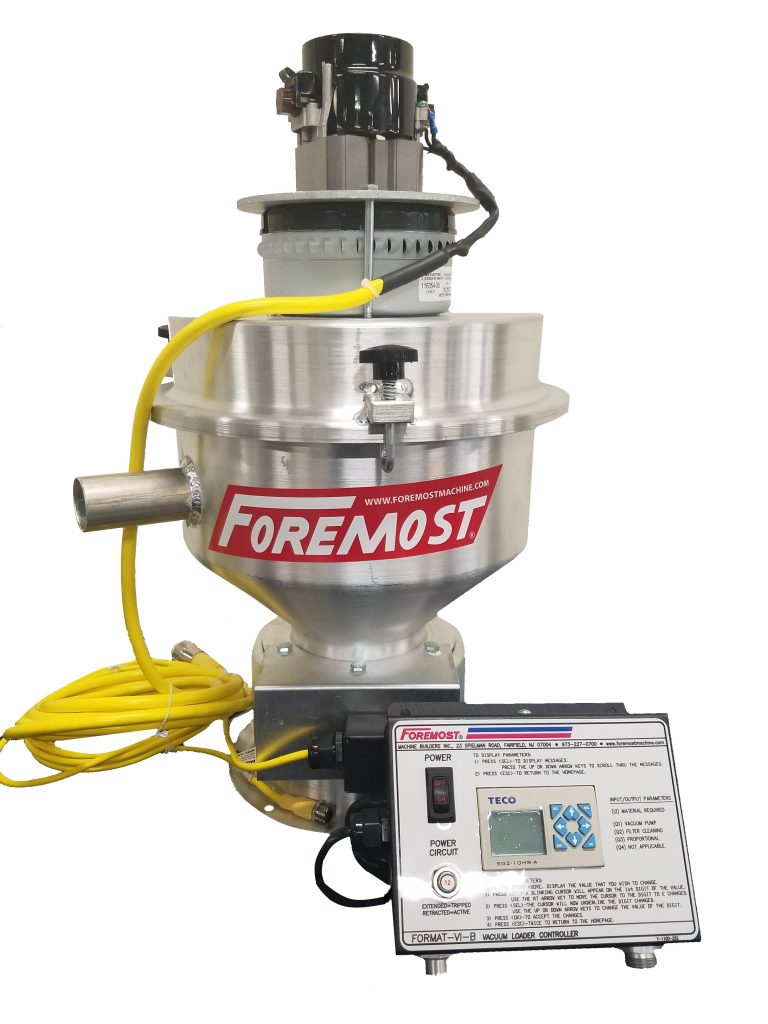
Machine Builders manufactures equipment
and systems for the pneumatic conveying of plastic resins,
polymers and other pellet or powered products commonly found in
the food, pharmaceutical and chemical industries. While our systems
and equipment can handle all sorts of materials, they serve what
is only a part of what is the much broader industry of matieral
handling.
For most of us material
handling refers to everything from the movement of products
on an assembly line to our luggage at the airport. Material handling
is simply the physical movement of material from one location to
another. While there is nothing really wrong with this definition,
it is too broad and doesn't really tell us much about material handling
in the manufacturing industry. To understand material handling,
especially as we understand it here at Foremost, you have to look
a little more carefully at what we mean by "handling" and "material".
Material
For the plastics industry,
material handling is the study of systems and equipment required
for the movement of plastic resin, whether it be pellet, granule,
powder or flakes.
When it comes to the manufacturing process in general, the material
being handled can come in any size, shape, weight or form. It can
be everything from raw material, partially assembled components
to finished goods. The material,
in our case, is a plastic resin - a raw material that has certain
properties and acts in a certain way.
For most industries,
material handling is about the movement of something atomic that
occupies space, has mass, and is used to make things. While raw
material exists in either the form of a solid, liquid or gas, the
plastics industry works primarily with a solid or a semi-solid polymer
which is basically a long-chain of carbon-based molecules. As a
solid or semi-solid, a plastic resin can exist in four possible
forms: as pellets, granular, powdered or even flaked. Each form
comes with its own set of properties that must be considered when
it comes to their handling.
Handling
At
Foremost we tend to restrict our expertise to the handling of material
that is delivered by truck or railcar. The handling of material
can include everything from the physical movement of a finished
product like a car to the alteration of an object's chemical composition.
It can refer to everything from the movement, storage, control and
protection of material throughout the process of its production,
distribution, consumption, and disposal. We are concerned with the
handling of the plastic resin from its delivery by truck or railcar,
to its storage in storage silos, to its distribution to the processing
equipment, i.e., an extruder hopper. Since we are always dealing
with bulk quantities of resin, whether it be from a truck or a railcar,
our methods of handling were designed specifically for bulk materials.
The
handling, movement or conveying of plastic resins is typically divided
into two categories: mechanical and pneumatic handling.
In the pneumatic category, there are two competing methods
for handling material that differ according to their air velocity
and the kind of material that they can move.
The
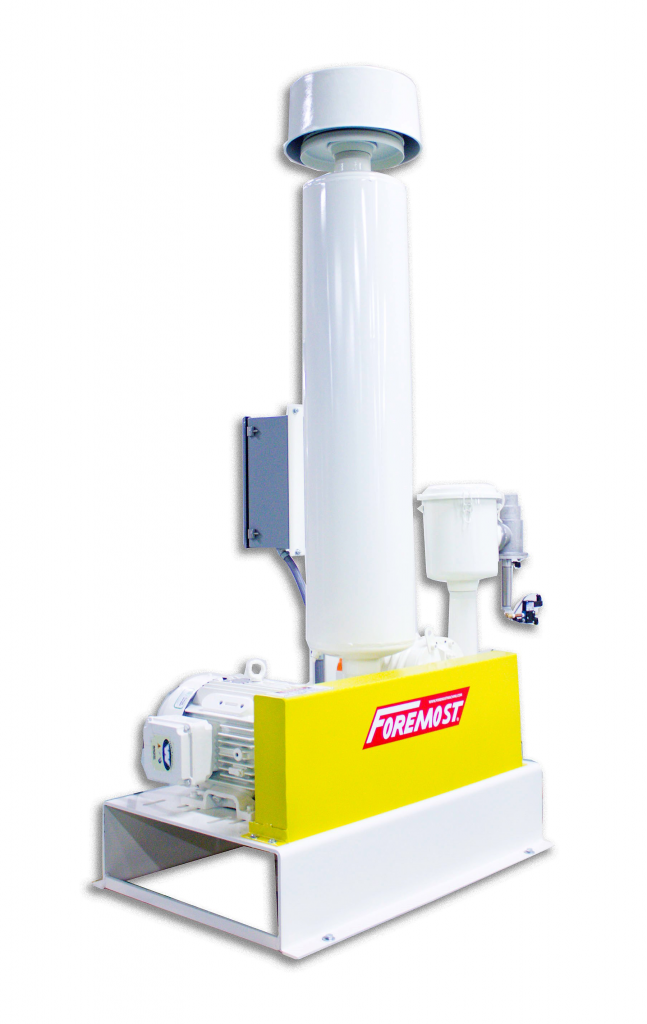
first method, known as dilute phase pneumatic conveying, is
a method of handling that uses a vacuum pump to pull the plastic
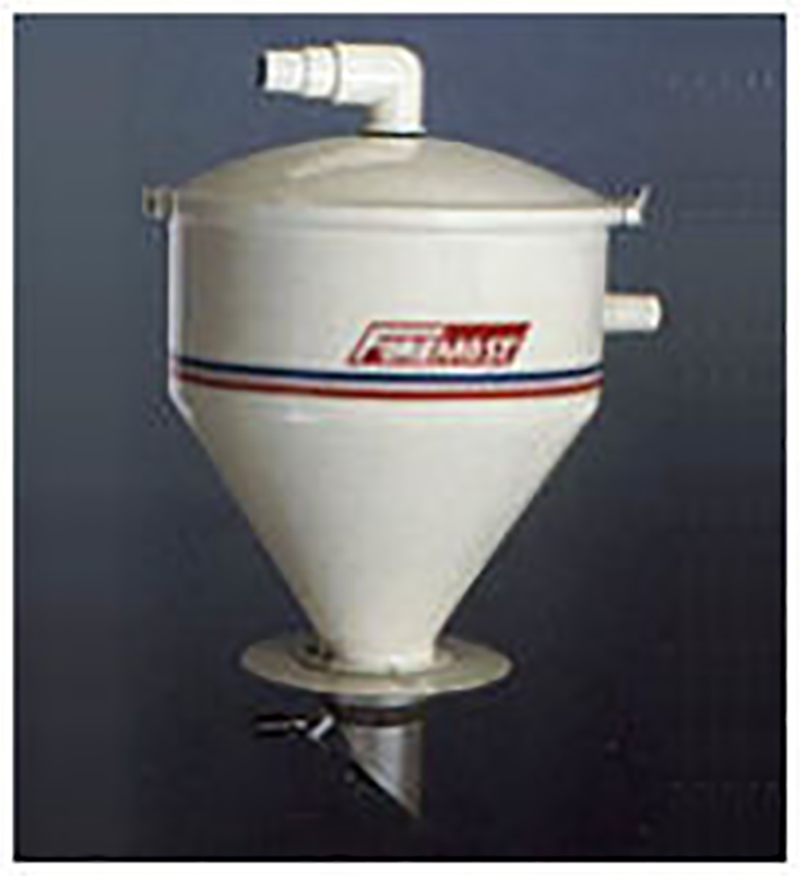
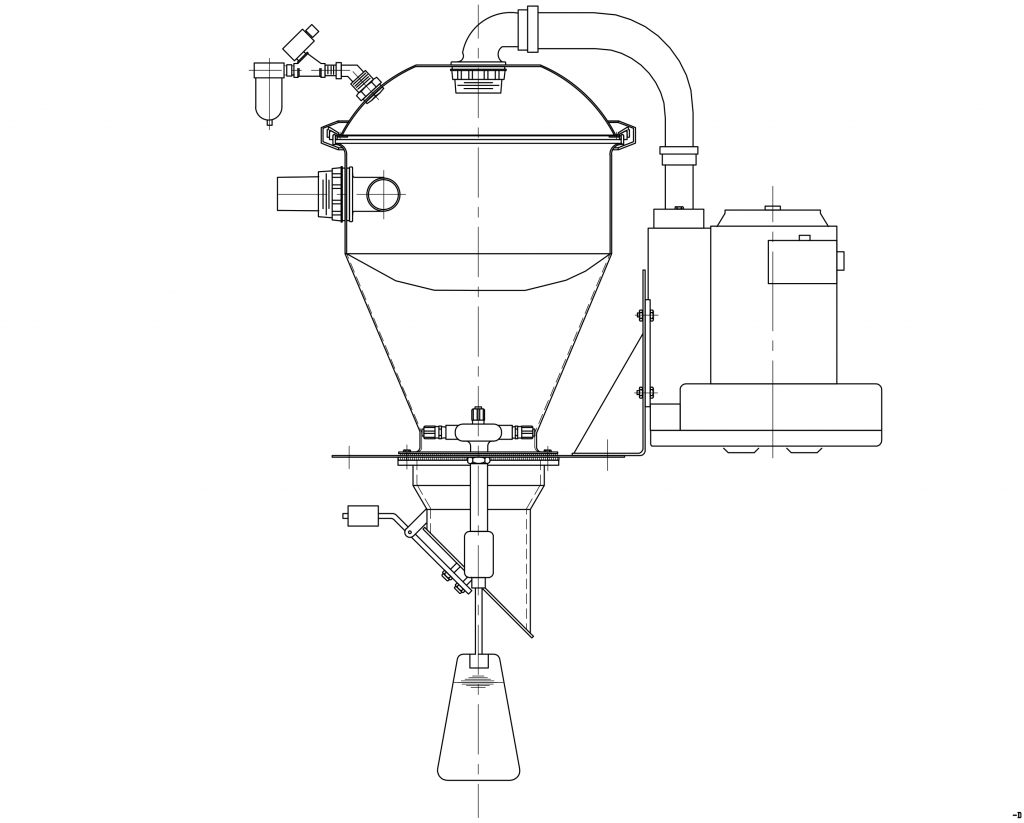
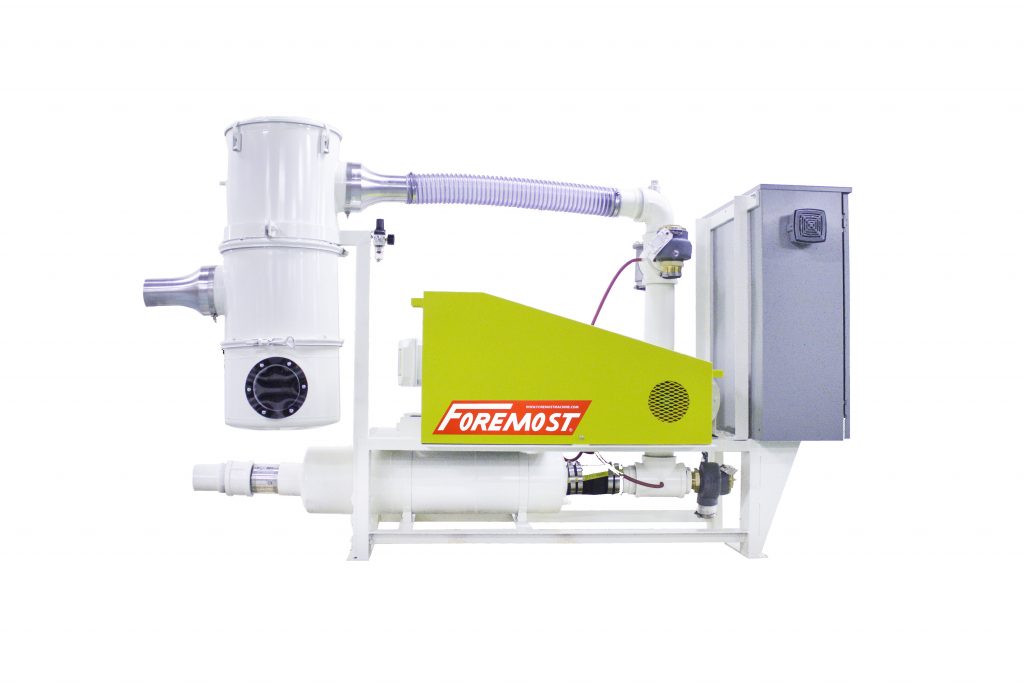
resin from the railcar through a pipe up to the vacuum receiver
on the storage silo. The second method, called dense phase pneumatic
conveying, uses a vacuum/pressure blower assembly to pull the
plastic resin from the railcar through a pipe to a transfer station
where the resin is blown into the storage silo by the pressure blower.
In both cases, material is moved through a pipe at a velocity such
that the material is moved in a stream-like state of suspension.
The main difference is that the
dilute phase method can produce a higher rate of air velocity than
the dense phase method.
In
order to know which method to use, the material handling expert
has know what kind of material is to be moved and its saltation
velocity, i.e., the velocity at which the material will fall
from suspension in the pipe. The air velocity of the dilute phase
method, for instance, is anywhere from 4000 to 8000 feet per minute
(FPM). Since most plastic resins have a saltation velocity of 3500
FPM, it follows that most experts would recommend using the dilute
phase method to move them. There are of course, certain drawbacks
to the dilute method, that must be considered. Some plastic resins,
for example, cannot be moved above a certain velocity or they begin
to deteriorate. These issues are addressed in detail in our article
How To Choose Between Dilute and Dense Phase Conveying. It
is enough to know that by material handling we are talking about
a certain kind of solid raw material and two competing methods of
handling that material.
Material handling from our standpoint, is
simply the study of the systems and equipment required for the movement
of a solid raw material with a saltation velocity that is easily
handled by the dilute or dense phase methods of pneumatic conveying.
The critical question facing those in the
manufacturing industry is whether or not their particular kind of
material can be moved by these two methods of handling. These methods
are not restricted to handling only plastic resins. If the material
is a solid with the right kind of properties, i.e., the appropriate
saltation velocity, there is no reason why these handling methods
couldn't do the job.
Contact us today: sales@foremostmachine.com
- Tel: 973.227.0700
We accept the following major credit cards:

|